

Hospitals and specialist clinics in Thailand can both provide appropriate care for different needs. Hospitals are generally better suited to complex conditions, multidisciplinary care, advanced diagnostics, surgery or inpatient treatment, while specialist clinics may be appropriate for clearly defined services that do not require hospital-level support.
INSIGHT > HEALTHCARE IN THAILAND
Hospital vs. Specialist Clinic in Thailand: Which Is Right for You?
AT A GLANCE
Key Differences
To Consider When Choosing Where
To Receive Care.

Hospital
Best Suit For…
Complex conditions, multidisciplinary care, advanced diagnostics, surgery and inpatient treatment.

Specialist Clinic
Best Suit For…
Focused services or specific areas of expertise where hospital-level care may not be necessary.

Cost & Convenience
What To Consider…
Fees, location, appointment availability, waiting time and the overall care experience can vary considerably.

Most Important
Clinical suitability comes first…
The right setting depends on your individual needs — not simply the most famous or least expensive option.
01. What Is the Difference Between a Hospital and a Specialist Clinic?
A hospital typically offers a broad range of medical services within one organization, with access to multiple specialties, diagnostic facilities,
emergency services and, where available, inpatient care and surgery. This can be particularly valuable when a health concern is complex or
requires coordination between several medical specialties.
A specialist clinic generally focuses on a narrower area of care or particular services. Depending on the clinic, this may mean greater specialization,
a more personalized environment, easier appointment access or a different price point.
Neither setting is automatically better. The more important question is whether the provider has the appropriate expertise, facilities and level of
medical support for your individual needs.
02. When Might a Hospital Be More Appropriate?
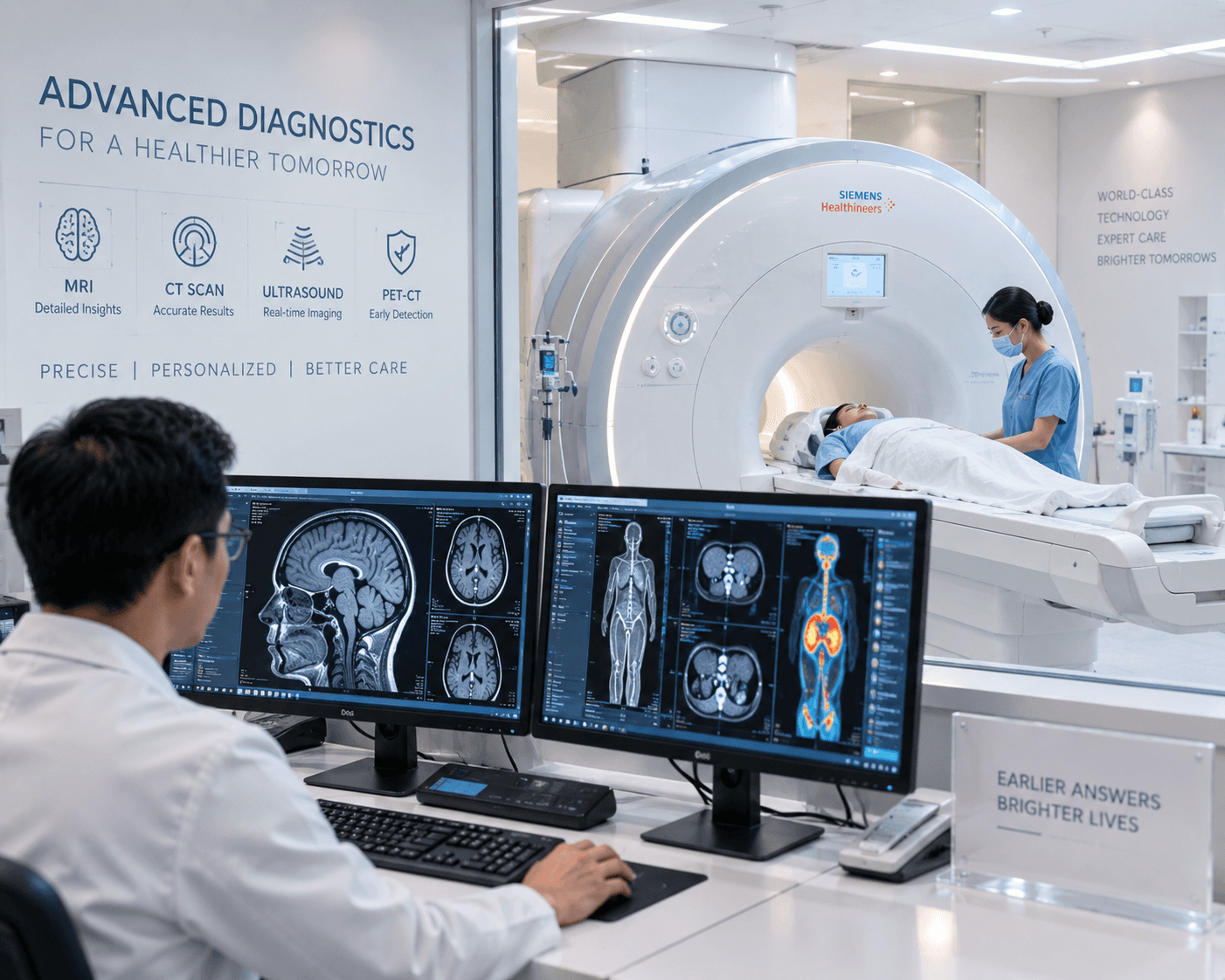
Hospital-level care may be more appropriate when a medical concern is complex, potentially serious or requires access to multiple specialties,
advanced diagnostics, surgery or inpatient treatment.
Hospitals can also offer an advantage when several health conditions need to be considered together, as different specialists and diagnostic services
may be available within the same healthcare system.
If there is uncertainty about the nature or severity of a health problem, seeking appropriate medical evaluation should take priority over convenience
or cost.
A hospital may be more appropriate when:
You have complex or multiple medical conditions.
Multidisciplinary specialist care may be required.
Advanced diagnostic facilities are needed.
Surgery or inpatient treatment may be necessary.
There is a higher level of medical risk.
Emergency or hospital-based support may be important.
03. When Might a Specialist Clinic Be a Suitable Option?
A reputable specialist clinic may be a suitable option when the required service is clearly defined and can be appropriately provided outside
a hospital setting.
Specialist clinics may focus on particular areas of medicine, aesthetic care, rehabilitation, preventive health or other specialized services. Some
clients may also value the more focused environment, personalized experience, convenient scheduling or different price point that certain
independent clinics can offer.
However, the quality and scope of specialist clinics can vary. Professional qualifications, relevant expertise, clinical standards and the clinic's ability
to manage complications or refer to hospital-level care should all be considered.
04. Hospital vs. Specialist Clinic : Key Differences
Consideration
Hospital
Specialist Clinic
Range of Care
Broad, multiple specialties
Usually more focused
Complex Medical Needs
Often better equipped
Depends on scope and facilities
Multidisciplinary Care
Usually a key advantage
May be more limited
Diagnostics
Often extensive
Varies by clinic
Surgery / Inpatient Care
May be available
Usually limited or unavailable
Specialist-Focused Services
Available
Often a key strength
Appointment Experience
Varies
May offer greater flexibility
Privacy & Personalization
Varies
May offer a more personalized setting
Cost
Varies considerably
May offer a different price point
05. Is a Specialist Clinic Always Less Expensive Than a Hospital?
Not necessarily. Healthcare costs in Thailand can vary widely depending on the provider, specialist, treatment, technology used, diagnostic
requirements and complexity of care.
A specialist clinic may offer a different price point for certain services, particularly when hospital-level facilities are not required. However, price
alone should not determine where you receive care.
A lower initial price may also not represent the total cost if additional investigations, follow-up care or referral to another provider becomes necessary.
When comparing options, consider what is included, who provides the care, the level of medical support available and whether the setting is
appropriate for your needs.
06. Does a Bigger or More Famous Hospital Mean Better Care?
A well-established hospital may offer important advantages, including extensive facilities, multidisciplinary teams, advanced technology and
access to a broad range of specialists. For many medical needs, these capabilities can be highly valuable.
However, size and reputation alone do not determine whether a provider is the most appropriate choice for every service or every individual.
For a specific need, a reputable specialist clinic or individual specialist may offer highly relevant expertise and a care experience that better suits
a client's priorities.
The goal should therefore be to identify the right expertise and level of care for the need rather than choosing on reputation alone.
The right provider is not necessarily the biggest, most famous or least expensive. It is the one that offers the appropriate expertise and level of
care for your needs.
07. What Should International Clients Consider?
International clients may have additional considerations beyond the medical service itself, particularly when care is being planned around travel.
Communication, appointment coordination, location, length of stay, recovery time and follow-up arrangements can all influence which provider
or care setting is most suitable.
It is also important to understand what happens if additional medical assessment or treatment becomes necessary while in Thailand, and whether
follow-up can continue after returning home.
Consider:
Language and communication
Location and travel time
Appointment coordination
Expected length of stay
Recovery requirements
Follow-up arrangements
Medical records and documentation
Access to hospital-level care if needed
08. What Questions Should You Ask Before Choosing a Provider?
Who will provide my care, and what are their qualifications?
Does the provider have relevant experience with my particular need?
Is this setting appropriate for the complexity of my care?
What facilities or diagnostic services are available?
What happens if complications or additional medical needs arise?
Is referral or hospital support available when necessary?
What is included in the quoted cost?
What follow-up care is provided?
For international clients, can follow-up continue after returning home?
A provider should be able to explain not only what they offer, but also why the proposed care setting is appropriate for your individual circumstances.
09. How Do You Decide Which Is Right for You?
Start with the nature of your health or wellness need rather than the name of a provider.
Consider the level of medical complexity involved, the expertise required, whether multidisciplinary support may be necessary, and what facilities
should be available. Once those requirements are clear, factors such as location, experience, convenience and cost can help distinguish between
suitable options.
For complex, high-risk or uncertain medical needs, hospital-level or multidisciplinary care should take priority. For clearly defined services that can
appropriately be provided outside a hospital, a reputable specialist clinic may be worth considering.
The final decision should be based on clinical suitability, professional expertise and your individual circumstances.
Sources & References : This guide is based on information from reputable medical organizations and peer-reviewed research.
Important Note : This guide provides general information to help readers understand healthcare options in Thailand. It does not replace professional medical advice, diagnosis or treatment. Individual healthcare needs should be assessed by an appropriately qualified healthcare professional.

Finding the Right Care Doesn't Have to Be Complicated.
Welleviva helps you navigate healthcare options in Thailand by understanding your needs, exploring appropriate care settings and connecting you with selected hospitals, specialist clinics and healthcare professionals.
Understand
Your Needs
We begin with what you are looking for and what matters to you.
Explore
Appropriate Setting
Understand when a hospital, specialist clinic or other provider may be suitable.
Compare
Suitable Options
Consider expertise, care setting, location, experience and different price points.
Connect
And Coordinate
Once you decide, we can assist with introductions, appointments and communication.
How Wellviva Can Help
Speak With An Advisor


WELLEVIVA
Your trusted guide to health and wellbeing in Thailand.
CONTACT US
+66 95 642 9829
info@welleviva.com
Bangkok, Thailand
SOLUTIONS
ABOUT US
FOLLOW US
© 2026 Welleviva · Privacy Policy · Terms & Conditions